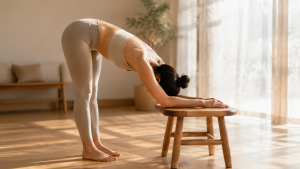
Rethinking the Desk Stretch Break
If you spend hours at a desk, you know the feeling: stiff neck, aching lower back, and eyes that feel like sandpaper by 3 p.m. The standard advice is to stretch more. But after years of working with desk-bound clients, I’ve learned that the typical “deskercise” routine often misses the point.
The goal isn’t to force your body into a pretzel. It’s to reset your nervous system, lubricate your joints, and give your tissues a break from sustained posture. This article is about a different approach: gentle movement as a micro-break, not a workout. It’s about 90-second sequences that combine breath with mobility, designed for real bodies with real aches and varied mobility.
When I first started advising people on desk stretches, I made the mistake of prescribing static holds for everyone. I quickly learned that what works for one person can aggravate another’s existing pain. The key isn’t the perfect stretch; it’s the approach. Let’s explore how to reset your body with kindness, not force.
What “Gentle Movement” Actually Means (And Why It Matters)
There’s a difference between static stretching and gentle movement. Static stretching means holding a position for 20-30 seconds to lengthen a muscle. Gentle movement is different: it’s slow, deliberate transitions through a joint’s available range of motion, often synchronized with breath.
Think of it as joint hygiene. Your joints have no direct blood supply; they rely on movement to circulate synovial fluid, which nourishes cartilage and reduces friction. When you sit still for hours, that fluid pools and thickens. Gentle movement pumps it around, effectively “lubricating” the joint. This is why it’s a more effective anti-inflammatory micro-break than static stretching alone.
Most people don’t realize that sustained sitting also puts your nervous system on a low-grade alert. Your brain interprets the lack of movement as a signal to tense muscles for stability. Gentle movement sends a different signal: it’s safe to relax. This is the nervous-system reset that static stretching often fails to provide.
The Anti-Inflammatory Rationale
Chronic inflammation is a well-known contributor to pain and fatigue. Prolonged sitting is a pro-inflammatory state. It reduces blood flow, slows metabolism, and increases pressure on spinal discs. Gentle movement counteracts this by promoting circulation and lymphatic drainage, which helps clear inflammatory byproducts from tissues.
This isn’t about burning calories or building muscle. It’s about telling your body, “We’re not under threat, we can release tension.” The most effective desk breaks are the ones that feel restorative, not exhausting.
The 90-Second Rule: Why Short, Frequent Breaks Beat a 30-Minute Routine
You’ve probably heard the advice to take a 5-minute break every hour. That’s good, but it’s not enough if the break is just staring at your phone. The most effective approach is shorter, more frequent, and more intentional. I call it the 90-second rule.
Here’s the logic: your body’s postural muscles start to fatigue after about 20 minutes of sustained sitting. Instead of waiting for pain, schedule micro-breaks every 30-45 minutes. Each break is under two minutes. This is short enough to be a habit and long enough to make a difference.
In my experience, the 90-second break works because it’s low-friction. It doesn’t require changing clothes, clearing a space, or breaking a sweat. You can do it in a meeting, on a call, or while you’re waiting for a file to render. It’s a reset, not a disruption.
Why 10-20 Second Holds Are Often Not Enough
Static holds of 10-20 seconds are great for lengthening a specific muscle, but they don’t address the broader issue of posture and nervous system tension. They also don’t improve your ability to move through your day. A slow, deliberate movement through your full available range—like a cat-cow stretch or a thoracic rotation—does more for your mobility in 90 seconds than a single static hold.
I’ve had clients who religiously stretched their hamstrings for months without relief. When we switched to gentle, full-body movement sequences that included hip mobility and spinal articulation, their lower back pain finally started to subside. The body works as a unit, not as isolated muscles.
The Core Sequence: Four Cumulative 90-Second Practices
Here’s the unique framework I use with clients. It’s a set of four cumulative sequences, each designed to reset a different area. You can do one, or all four, depending on your time and how you feel. Remember: the goal is gentle movement, not forcing yourself into a position. If something hurts, stop or reduce the range of motion.
Sequence 1: The Breath-Driven Spine Reset
This sequence targets your mid-back and ribs, which get compressed when you sit hunched over a keyboard. It’s also a powerful nervous-system reset because it encourages slow, diaphragmatic breathing.
How to do it:
- Start seated at the front edge of your chair, feet flat on the floor. Place your hands on your ribs.
- Inhale slowly through your nose, letting your ribs expand outward in all directions, not just forward. Feel your spine gently extend.
- Exhale fully through your mouth, letting your ribs soften and your spine curl into a gentle C-shape. Your chin can tuck slightly.
- Repeat for 6-8 breath cycles, moving slowly. The movement should be led by your breath, not forced by your muscles.
What can go wrong: You might try to force the movement by arching your lower back. Instead, think about creating length through your torso. The movement is subtle. Most people don’t realize that the spine’s ability to extend and flex is often limited by the ribs and breathing, not the spine itself.
Sequence 2: The Shoulder Girdle Reset
This is for the neck and shoulders. It’s not a shoulder shrug; it’s a controlled, circular movement of the shoulder blades to improve mobility.
How to do it:
- Sit tall, arms relaxed at your sides. Inhale, and gently lift your shoulders toward your ears.
- Exhale, and roll your shoulder blades back and down, as if you’re sliding them into your back pockets. Don’t squeeze them together forcefully.
- Reverse the direction on your next breath: lift, and roll forward and down.
- Do 5 rotations in each direction, slowly.
The thing nobody tells you about this exercise: it’s not about shoulder movement. It’s about thoracic spine mobility. If your mid-back is stiff, your shoulder blades can’t move properly, and your neck takes the brunt. This is why you should feel it in your upper back, not just your shoulders.
Sequence 3: The Hip Hinge Reset
This is a gentle, standing or seated hip hinge. It targets tight hip flexors and encourages better posture when you stand.
How to do it (seated option):
- Sit at the edge of your chair, feet hip-width apart. Place your hands on your thighs.
- Inhale, and lengthen your spine. Exhale, and hinge forward from your hips, keeping your back long. Pause when you feel a gentle stretch in your hamstrings or your back.
- Inhale, and return to the starting position. Imagine your tailbone reaching back as you hinge.
- Repeat 5-6 times.
How to do it (standing option):
- Stand a few steps back from your chair. Place your hands on your thighs. Inhale, lengthen your spine. Exhale, and hinge forward, keeping your back flat. Let your arms hang or reach forward.
- Inhale, and press through your feet to return to standing. This is a hamstring and back reset.
- Repeat 5-6 times.
Adaptive option: If you have lower back issues, keep your hands on your thighs for support and don’t hinge as far. The goal is to move, not to feel a deep stretch.
Sequence 4: The Micro-Strengthening Postural Reset
This is the one that separates this approach from basic stretching. It’s not just about lengthening; it’s about gently activating the muscles that support your posture.
How to do it:
- Sit tall with your feet flat. Place your hands behind your head, elbows wide.
- Inhale, and gently press your head back into your hands, resisting with your hands. This is an isometric contraction for your upper back and neck extensors. Hold for 5-10 seconds.
- Exhale, and release. Repeat 3-4 times.
- Next, place your hands on your thighs. Inhale, and gently press your heels down into the floor, as if you’re trying to push the floor away. Hold for 5-10 seconds. This activates your core and glutes.
- Exhale, and release. Repeat 3-4 times.
What can go wrong: With the head press, don’t use your hands to push your head forward. The resistance is subtle. The goal is to wake up the muscles, not to create tension. This micro-strengthening is what builds postural support over time, which is why it’s a critical piece of the puzzle.
Adaptive Options: Movement for Every Body
Not everyone can sit in a chair or stand. Here’s how to adapt these sequences for varying mobility.
If You Have Lower Back Pain
When you have a disc issue or sciatica, flexion (bending forward) can be problematic. In that case, skip the hip hinge and instead do a gentle standing extension:
- Stand, place your hands on your lower back, and gently lean back, looking slightly up. Hold for 2 breaths. Repeat 3 times.
- For the spine reset, keep your movement very small. Focus on the breath, not the spinal curl.
- Avoid any movement that causes pain to radiate down your leg. If it does, stop and consult a professional.
If You Have Limited Shoulder Mobility
If you have a frozen shoulder or rotator cuff issues, avoid overhead reaches. The shoulder girdle reset is safe, but don’t force the rotation. You can also do a simpler version:
- Sit or stand. Inhale, and lift your arms out to the sides to shoulder height, palms down. Exhale, and lower them. Repeat 5 times.
- This is a pendulum movement that improves circulation without aggravating the joint.
If You’re Fatigued or Unwell
On days when you’re exhausted, the goal is nervous-system reset, not movement. Just do the breath-driven spine reset. Or, even simpler:
- Place your feet on the floor and your hands on your thighs.
- Inhale for 4 counts, exhale for 6 counts. Do this for 90 seconds.
- This activates your parasympathetic nervous system, which helps with fatigue.
Building the Habit: Cues and Scheduling
The best routine is the one you actually do. The trick is to tie your micro-breaks to natural triggers in your day, not to a rigid schedule that you’ll abandon by Tuesday.
The “Trigger-Based” Schedule
Instead of setting a timer for every 45 minutes, use these cues:
- After you send an important email: Do the Spine Reset. It’s a transition signal for your brain.
- Before you make or answer a call: Do the Shoulder Girdle Reset. It improves your voice and posture.
- After lunch: Do the Hip Hinge Reset. It helps with post-meal lethargy.
- Before a video meeting: Do the Micro-Strengthening Reset. It wakes up your postural muscles so you look more engaged.
This is a simple “cues to remember” schedule. It’s low-effort and high-impact because it’s built into your natural workflow.
Progressing Over Time
Like any skill, gentle movement improves with practice. Start with one sequence a day. After a week, add a second. After a month, you’ll likely find yourself moving more naturally throughout the day.
Progress doesn’t mean doing more reps or holding longer. It means noticing more: becoming aware of where you hold tension and releasing it earlier. It means your body starts to crave these resets, which is the ultimate sign of habit formation.
For more on building a movement practice, you might find our Energizing Morning Routine with Light Movement helpful, as it applies the same principles to morning hours.
When to Seek Professional Help
Gentle movement is powerful, but it has limits. If you have sharp, shooting pain, numbness, or tingling, stop and consult a doctor or physical therapist. These are signs of a more serious issue that movement alone won’t fix.
Also, if you have a diagnosed condition like osteoporosis, herniated disc, or severe arthritis, work with a professional to design a safe movement plan. What I’ve shared here is general guidance, not medical advice.
I’ve also seen people use gentle movement as a way to avoid standing up. A 90-second break is a start, but it’s not a substitute for getting up and walking around. The 30-Day Gentle Walking Challenge for Beginners is a great complement to your desk breaks, as it builds stamina and circulation over time.
The Bottom Line: Kindness Over Force
The shift from “doing stretches” to “resetting your body with kindness” is more than a semantic change. It changes your relationship with your body. Instead of forcing a tight hamstring to lengthen, you’re inviting your spine to move, your shoulders to release, and your breath to deepen.
This approach is more sustainable, more effective for pain, and more aligned with what your body actually needs after hours at a desk. So the next time you feel that familiar ache, pause. Take a 90-second break. Move gently. Breathe. Notice the difference.
Your body has been talking to you all along. It’s time to listen.