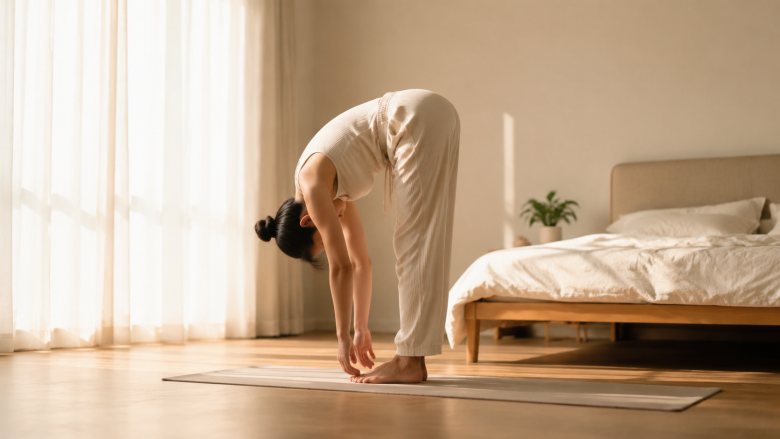
Why Your Morning Stretch Should Change With Your Energy
Most morning stretch routines promise a one-size-fits-all fix: do these eight moves every day and you’ll feel great. But real mornings aren’t that predictable. Some days you wake up already buzzing, ready to move. Other days—after a poor night’s sleep, a stressful week, or a lingering cold—your body feels like a rusted gate. Pushing through a fixed routine on those low-energy mornings can do more harm than good, triggering your sympathetic nervous system (fight-or-flight) instead of calming it.
The solution isn’t to skip stretching altogether. It’s to adapt the sequence to your current state. This article gives you a 10-minute, two-track routine: one for high-energy days (dynamic, standing flow) and one for low-energy days (restorative, floor-based). Both start with the same spinal waves in bed to gently wake the vagus nerve—the main highway of your parasympathetic nervous system. From there, you choose your path. No guesswork, no guilt.
I’ve been teaching gentle movement for over a decade, and the single biggest mistake I see is people forcing a static routine when their body is screaming for something different. The thing nobody tells you about morning stretching is that the sequence matters far more than the individual moves. If you stretch your hamstrings before your spine is mobile, you’re essentially pulling on a rope that’s still knotted. You need to untie the knots in order—starting with the central nervous system, then the axial skeleton, then the periphery. That’s what this routine does.
What Makes This Routine Different: Nervous System Sequencing
Most articles list stretches by body part—neck, shoulders, back, hips, legs. That’s fine for a generic warm-up, but it ignores how your nervous system actually wakes up. Your vagus nerve runs from your brainstem down through your neck, chest, and abdomen, influencing heart rate, digestion, and mood. Gentle, rhythmic movement of the spine—especially flexion and extension—stimulates the vagus nerve, shifting you out of the morning cortisol spike and into a state of calm alertness.
That’s why both tracks of this routine begin with the same three-minute spinal wave sequence, performed while still in bed. You’ll do this before your feet even touch the floor. After that, you decide: Track A (low-energy) stays on the floor for slow, supported stretches that further downregulate the nervous system. Track B (high-energy) transitions to standing for a more dynamic flow that builds heat and circulation.
For a deeper dive on how gentle movement can regulate your nervous system throughout the day, see our guide on Energizing Morning Routine with Light Movement. The principles there complement this morning stretch perfectly.
The 3-Minute Bed Sequence (Both Tracks)
Perform this entire sequence while lying on your back in bed. Use a pillow under your knees if your lower back feels sensitive. Breathe slowly through your nose—inhale for four counts, exhale for six. This extended exhale is the key to vagus nerve activation.
1. Pelvic Tilts (1 minute)
Lie on your back with knees bent, feet flat on the mattress, arms resting at your sides. On an exhale, gently tilt your pelvis posteriorly, pressing your lower back into the bed. On an inhale, release back to neutral. Repeat slowly, focusing on the subtle rocking motion. Most people rush this—they try to create a big arch. The goal is micro-movement. You should feel a gentle compression and release in your sacrum.
2. Knee Circles (1 minute)
Keep your knees bent and together. Slowly circle both knees in one direction, letting your lower back and hips move naturally. Five circles clockwise, then five counterclockwise. This is not a leg exercise—it’s a spinal mobilization. If you hear clicking or feel sharp pain, reduce the circle size. What can go wrong: people often hold their breath or tense their shoulders. Keep your jaw soft.
3. Spinal Twists (1 minute)
From the same starting position, let both knees fall to the right, keeping your shoulders pinned to the bed. Turn your head to the left. Hold for three slow breaths. Then switch sides. This is a gentle twist, not a deep rotation. The twist should feel like a wringing out of the spine, not a torque. If your knees don’t reach the bed, that’s fine—place a pillow between them for support.
After these three minutes, pause. Notice how your body feels. This is the decision point.
Track A: Low-Energy Morning (Restorative Floor Series)
Use this track when you feel groggy, sore, or emotionally flat. The goal is not to energize—it’s to gently coax your system into a state of safety. You’ll stay on the floor (or a yoga mat) for the remaining seven minutes. Move slowly, with long holds.
4. Cat-Cow on Hands and Knees (2 minutes)
Come to all fours on your mat. If your wrists are sensitive, make fists or use yoga blocks under your hands. Inhale, drop your belly, lift your chest and tailbone (cow). Exhale, round your spine, tuck your chin and tailbone (cat). Move at half speed—one full breath cycle per movement. The common mistake is to focus only on the back arch; instead, initiate the movement from your tailbone and let it ripple up. This wave-like motion is what stimulates the vagus nerve.
5. Child’s Pose with Side Stretch (2 minutes)
From all fours, sit your hips back toward your heels, extending your arms forward. If your hips are tight, place a pillow between your thighs and calves. Stay here for five deep breaths. Then, walk your hands to the left, feeling a stretch along your right side. Hold five breaths. Repeat on the other side. This addresses the lateral fascial lines that often get ignored in morning routines.
6. Supine Figure-Four Stretch (2 minutes per side)
Lie on your back, cross your right ankle over your left knee, and gently pull your left thigh toward your chest. Keep your right foot flexed to protect the knee joint. Hold for six slow breaths. Switch sides. If this is too intense, place a pillow under your head or keep the left foot flat on the floor. Many people with tight hips try to force the knee down—don’t. The stretch comes from the hip external rotation, not the knee position.
7. Constructive Rest (1 minute)
End by lying on your back with knees bent, feet flat, hands on your belly. Close your eyes and breathe naturally for one minute. This is not a stretch—it’s integration. Allow the nervous system to absorb the input. If your mind wanders, gently bring attention back to the rise and fall of your belly.
Track B: High-Energy Morning (Dynamic Standing Flow)
Use this track when you wake up feeling restless, stiff but not exhausted, or you have a busy day ahead. The goal is to generate warmth and mobility without overstimulating. You’ll stand up after the bed sequence and move through a flowing series.
4. Standing Forward Fold with Shoulder Rolls (2 minutes)
Stand with feet hip-width apart. On an exhale, hinge at your hips and fold forward, bending your knees as much as needed. Let your head and arms hang heavy. On an inhale, roll up slowly, stacking one vertebra at a time. At the top, roll your shoulders back and down. Repeat five times. The key is to keep your knees bent in the forward fold—straight legs here can overstretch the hamstrings and irritate the sciatic nerve, especially first thing in the morning.
5. Sun Salutation Mini-Flow (3 minutes)
From standing, inhale and reach your arms overhead. Exhale, fold forward. Inhale, lift your chest halfway (flat back). Exhale, step or walk back to a high plank. Lower your knees, chest, and chin (or lower all the way if you have the strength). Inhale into a gentle cobra (keep your hips on the mat, elbows bent). Exhale, push back to child’s pose or downward dog. Inhale, step or walk your feet to your hands, and on an exhale, fold. Inhale, rise to standing with arms overhead. Exhale, hands to heart. Repeat three times. This is not a power vinyasa—keep the transitions slow and intentional. If you have wrist issues, stay in plank on your fists.
6. Standing Side Bend with Triangle Prep (1 minute per side)
Stand with feet wide (about 3-4 feet apart). Turn your right foot out 90 degrees, left foot slightly in. Inhale, reach your right arm up and over to the left, bending sideways. Keep your hips square. Hold for three breaths. Then, from the same stance, slide your right hand down your right leg (resting on your shin or a block) and reach your left arm toward the ceiling—a gentle triangle variation. Hold three breaths. Repeat on the left side. This opens the side body and intercostal muscles, which often restrict breathing after a night of shallow sleep.
7. Gentle Backbend with Chair Pose (1 minute)
Stand with feet together. Inhale, sweep your arms overhead and slightly back, opening your chest. Exhale, bend your knees and sit back as if into a chair, keeping your arms by your ears. Hold for three breaths. Inhale, straighten your legs and rise. Repeat twice. This counteracts the forward hunch from sleeping and sitting. Avoid overarching your lower back—engage your glutes slightly to protect the lumbar spine.
Why Sequence Logic Matters: Spine First, Then Hips, Then Periphery
When I first started teaching morning stretch routines, I made the mistake of jumping straight into hamstring stretches because they felt so tight. I learned the hard way that tight hamstrings are often a compensation for a locked-up pelvis or a restricted thoracic spine. By stretching the hamstrings first, you temporarily increase range of motion but don’t address the root cause. The next morning, they’re tight again.
The correct sequence—spinal waves, then pelvic/hip mobilizations, then larger limb stretches—respects the body’s myofascial connections. Your spine is the central axis. Your hips and shoulders are the proximal joints. Your knees, elbows, ankles, and wrists are the distal joints. If you mobilize the axis first, the rest follows more easily. This is not my opinion; it’s a principle of motor control and movement science. When you stretch a muscle without first mobilizing the joint above and below it, you’re essentially pulling on a chain that’s locked at both ends.
This is also why many people feel more energized after a properly sequenced morning stretch compared to a random grab-bag of stretches. The nervous system receives coherent input: first the spine tells the brain “I am moving safely,” then the hips follow, then the legs. This reduces the startle reflex and allows the vagus nerve to stay engaged.
Practical Integration: Bed vs. Floor Settings
One of the biggest barriers to a consistent morning stretch routine is the friction of getting out of bed to a cold floor. My advice: do the first three minutes in bed, no exceptions. That alone can shift your morning. If you’re using Track A, you’ll need to move to a mat on the floor. Keep your mat next to your bed so you can roll onto it without standing. If you’re using Track B, you’ll stand up after the bed sequence, so the transition is natural.
A common question I get: “What if my mattress is too soft for the bed sequence?” If your mattress sinks too much, place a thin blanket or yoga mat on top to create a firmer surface. Alternatively, do the bed sequence on the floor with a pillow under your head. The key is to avoid a surface that causes your spine to sag into extension or flexion.
Another edge case: what if you have an injury or chronic pain? For example, if you have a herniated disc, avoid the spinal twists in the bed sequence—just do pelvic tilts and knee circles. If you have knee issues, skip the figure-four stretch and use a supine hamstring stretch with a strap instead. The routine is a framework, not a prescription. Adapt as needed.
For a more detailed look at how to build your own routine from scratch, check out How to Build a Simple Morning Stretch Routine. It covers the principles of progression and how to listen to your body’s feedback.
Common Mistakes and How to Avoid Them
Even with a good sequence, people still make errors that undermine the benefits. Here are three I see most often:
- Holding your breath. This is the number one mistake. If you hold your breath during a stretch, you’re signaling danger to your nervous system. The stretch becomes counterproductive. Always pair the movement with an exhale. If you find yourself holding, back off the intensity.
- Using momentum instead of muscle. Especially in the standing flow, people swing into forward folds or use jerky movements. This can strain the hamstrings and lower back. Move as if you’re underwater—slow and controlled.
- Overstretching cold tissues. The first few minutes are for warming up, not for deep stretching. In the low-energy track, the figure-four stretch should feel like a gentle release, not a sharp pull. In the high-energy track, the forward fold should be with bent knees. Save the deep, long holds for later in the day when your tissues are warmer.
A single session of overstretching can set you back days—especially if you’re older or have connective tissue issues like hypermobility. If you feel a pinching sensation in a joint, stop and reduce the range. Pain is not gain in gentle movement.
Tracking Your Progress: A Simple Check-In System
How do you know if this routine is working? I recommend a two-point check-in: before you start, rate your energy on a scale of 1-10 and your stiffness on a scale of 1-10. After the routine, rate them again. Over a week, you’ll see patterns. On days when you choose the wrong track, your scores might stay the same or even worsen. That’s feedback, not failure. Adjust the next day.
You can also track which track you chose and how you felt afterward. Over time, you’ll develop a sense of which track works best for which type of morning. For example, I’ve found that if I woke up with a headache, the low-energy track with extra time in child’s pose helps more than the standing flow. If I woke up anxious, the standing flow with deep breathing helps burn off the nervous energy.
Ultimately, the goal is not to become more flexible. It’s to start your day in a state of regulation—where your nervous system feels safe and your body is ready to move through the world with ease. That’s the real win.
Frequently Asked Questions
Can I do this routine every day?
Yes, but vary the track based on how you feel. Doing the same track daily will lead to plateaus and potential overuse. The two-track design is built for daily use because it respects your body’s natural cycles.
What if I only have 5 minutes?
Do the bed sequence (3 minutes) and then pick one move from your chosen track—preferably the one that addresses your biggest tightness. For low-energy, child’s pose. For high-energy, the standing forward fold with shoulder rolls. Even that 5-minute version can shift your morning.
Is this routine safe for seniors or beginners?
Yes. All moves have modifications mentioned. If you have specific medical conditions, consult your doctor first, but generally this routine is designed to be accessible. The bed sequence is especially senior-friendly because it’s low-impact and supported.
Should I stretch before or after drinking water?
I recommend drinking a glass of water after the bed sequence and before the track-specific moves. Hydration primes the fascia and helps with joint lubrication. For more on this, see our article on How to Start a Simple Morning Hydration Routine. It pairs well with this stretch.
The adaptive morning stretch routine is not a rigid prescription—it’s a conversation with your body. Some days you’ll choose Track A and feel amazing. Other days you’ll choose Track B and realize it was too much. That’s okay. The skill is in the choosing, not the doing. Over time, you’ll learn to read the signals: the quality of your breath, the tension in your jaw, the heaviness in your limbs. And then the routine becomes less of a chore and more of a homecoming.