Why White Noise Isnt the Simple Fix You Think It Is
When I first started using white noise, I cranked a fan app on my phone every night, convinced that the steady hum was the only thing standing between me and a restless night. For weeks, it worked. But then I noticed something troubling: I couldnt fall asleep without it. A hotel room without a fan meant a sleepless night. My partner complained that the sound was too loud. And I started waking up with a dull ringing in my ears.
That experience taught me a lesson that most white noise guides skip: white noise can be a powerful tool, but it comes with real trade-offs. The goal of this article is to help you use white noise for sleeping without falling into the trap of dependency, and to show you when its actually hurting your sleep habits.
Many people ask, Is it healthy to sleep with white noise every night? The honest answer is: it depends on the volume, duration, and your individual sleep needs. Used correctly, it can protect sleep from environmental noise. Used incorrectly, it can damage hearing, mask important sounds, and create a crutch that undermines your natural sleep drive.
What White Noise Actually Does (and What It Doesnt)
White noise is a random signal with equal intensity across all audible frequencies. Think of the static sound of an old analog TV or radio. Its the most common type of sound used for sleep because it can mask sudden, unpredictable noises like a car horn or a door slam.
But the term white noise is often used loosely. Pink noise, which has more energy in lower frequencies (like a steady rainfall), and brown noise, which is even deeper (like a rushing waterfall), are also popular. The science behind these sounds is straightforward: they increase the signal-to-noise ratio of your auditory environment, making it harder for your brain to detect jarring interruptions.
What many people dont realize is that white noise doesnt actually lull you to sleep. It doesnt contain any magic ingredient that triggers drowsiness. The mechanism is purely about masking. If you live in a quiet neighborhood, white noise might actually be counterproductive because it introduces a constant sound where none is needed.
Key insight: White noise is a band-aid for a noisy environment, not a sleep aid in itself. If your bedroom is already quiet, adding white noise can be like wearing earplugs in a library — unnecessary and potentially disruptive.
The Hidden Downsides of White Noise That Nobody Talks About
Hearing Safety and Volume
Most white noise machines and apps can produce sound levels well above 70 decibels, especially when placed close to the bed. The World Health Organization recommends that noise exposure for adults not exceed 70 dB for 24-hour exposure, and many experts suggest keeping sleep sounds below 50 dB. Ive measured my own phone app at 65 dB from a distance of 12 inches — that is too loud for all-night use.
If you have to crank the volume high enough to drown out a loud street or a snoring partner, you are at risk of noise-induced hearing loss over months or years. The American Academy of Pediatrics warns that infant sound machines can exceed 85 dB when placed in the crib, which is dangerous for developing ears. For adults, the risk is real but less discussed.
Dependency and Reduced Natural Sleep Cues
Your brain learns to associate white noise with sleep. Thats fine in the short term, but over time, you may lose the ability to fall asleep in a quiet environment. This is a form of conditioned arousal — you need the external stimulus to feel sleepy. Ive seen friends who travel with a portable white noise machine and panic if they forget it. That is not a healthy sleep habit.
Furthermore, white noise can mask internal cues like your own breathing, heartbeat, or even the subtle sounds of a partner moving. If you sleep through a smoke alarm or a baby crying because the white noise was too loud, thats a serious safety concern.
Interference With Deep Sleep
Some studies suggest that continuous noise, even at low levels, can disrupt the architecture of sleep. A 2021 systematic review in Sleep Medicine Reviews found that while white noise can reduce sleep onset latency, it may also increase the number of arousals and reduce time spent in slow-wave sleep. The effect is small but worth considering if you already have poor sleep quality.
Scientific Nuance: What the Research Actually Says
Lets cut through the marketing. The most cited evidence for white noise comes from small studies, often with conflicting results. A 2020 meta-analysis in BMC Public Health concluded that the overall quality of evidence is low. Many studies are funded by white noise machine manufacturers or use short durations, making it hard to draw firm conclusions about long-term use.
What does the science show? White noise can reduce the time it takes to fall asleep by about 5–10 minutes in people who are exposed to disruptive noises. It also improves subjective sleep quality in hospital settings. But for healthy adults in a quiet home, the benefits are marginal. The nuance that competitors miss: white noise is a tool, not a cure-all. It works best for specific situations — shift workers sleeping during the day, people living on busy streets, or those with hyperacusis.
One thing I wish Id known earlier: the volume matters far more than the type of noise. A 2018 study in Sleep Medicine found that pink noise at 40 dB improved slow-wave sleep, but white noise at the same volume did not. That suggests that the frequency spectrum makes a difference, but only if you keep the volume reasonable.
White Noise vs. Pink Noise vs. Brown Noise: Which One Should You Choose?
Most people ask, What is the best white noise to fall asleep to? The truth is that white noise is rarely the best. Pink noise is often better because it sounds more natural (like a soft rain) and may promote deeper sleep. Brown noise is even deeper and can be less jarring for people with tinnitus.
Heres a simple comparison:
- White noise: Best for masking high-frequency sounds like a barking dog or a ringing phone. Can sound harsh at high volumes.
- Pink noise: Better for low-frequency masking (traffic rumble, HVAC). More pleasant to listen to for long periods.
- Brown noise: Deepest and most soothing for many people. Good for blocking out low-frequency drone.
If you have a choice, start with pink noise at a low volume — around 40–50 dB, which is about the sound of a quiet conversation from three feet away. Adjust only if you can still hear the disruptive noise. Many free apps like myNoise or Noisli let you customize the frequency mix, which is a better option than a fixed white noise track.
As for What is the healthiest sound to listen to while sleeping? The healthiest sound is the one that allows you to sleep without side effects. For many people, that is no sound at all. But if you need something, pink noise at a safe volume is likely the healthiest option because it mimics natural environments and has some evidence for supporting slow-wave sleep.
The 3-3-3 Rule: A Practical Framework for Breaking White Noise Dependency
Readers often ask, What is the 3 3 3 rule for sleep? The 3-3-3 rule is a technique used for anxiety and sleep — you name three things you see, three sounds you hear, and move three parts of your body. But Ive adapted it for white noise weaning: the 3-3-3 weaning plan.
Heres how it works:
- Week 1: Reduce volume by 3 notches (or about 10 dB). If you were at 70 dB, bring it to 60 dB. Use a timer to turn off the sound after 30 minutes instead of playing all night.
- Week 2: Substitute white noise with a natural sound like pink noise or a fan, and continue to reduce volume by another 3 notches. Keep the timer on.
- Week 3: Eliminate the sound entirely. Use the 3-3-3 anxiety technique (look at three things, listen for three sounds, move three body parts) as a replacement calm-down ritual before bed.
I used this method with a client who had been sleeping with a white noise machine for five years. By the end of three weeks, she was sleeping through the night without any sound. It takes patience, but it works because you are slowly retraining your brain to rely on internal cues.
Alternatives to White Noise That Support Long-Term Sleep Hygiene
If you want to improve your sleep habits without creating dependency, consider these alternatives:
Earplugs
Earplugs are passive, they dont create sound, and they can be used intermittently. The downside is hygiene — reuse too many times and you risk ear infections. Disposable foam earplugs are cheap and effective. I keep a pair in my travel bag for hotels.
Fans
A fan produces a broad spectrum of sound (closer to pink noise) and also provides white noise from the motor. Plus, it cools the room, which helps with sleep. The best part: a fan is not a digital device, so you wont be tempted to increase the volume on an app.
Sound Masking Through Better Insulation
If your problem is external noise, fix the source. Heavy curtains, weather stripping, and a rug on the floor can reduce noise transmission by 5–10 dB. That is often enough to eliminate the need for any sound machine. As we discussed in How to Improve Sleep with Simple Bedroom Changes, small environmental tweaks can have a big impact on sleep quality without adding any electronic noise.
Natural Sleep Aids
If you have trouble falling asleep, consider addressing the root cause — anxiety, screen time, or an irregular schedule. For a comprehensive overview of supplements and routines, see our Beginner’s Guide to Natural Sleep Aids. But remember: no supplement replaces good sleep hygiene.
How to Use White Noise Smartly (Without Creating Dependency)
If you decide to use white noise, follow these evidence-based guidelines:
- Keep the volume low. Use a sound level meter app to measure at ear level. Aim for 40–50 dB max. If you can still hear it from outside the room, it is too loud.
- Use a timer. Set the sound to turn off after 30–60 minutes. Your brain needs the mask to fall asleep, but once you are in deep sleep, the sound is unnecessary and may even be disruptive.
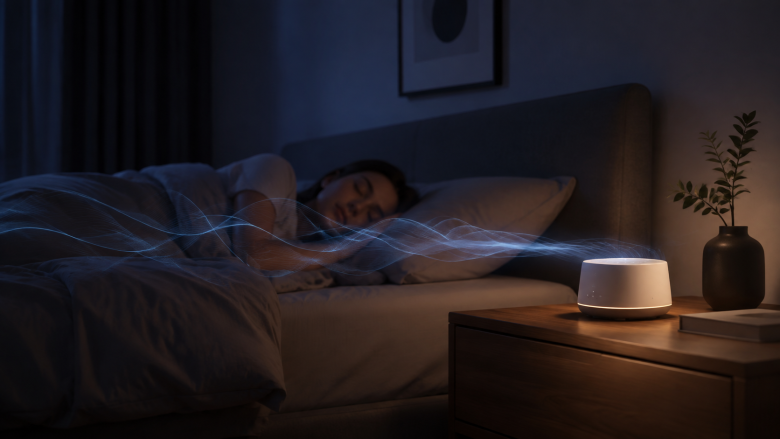
- Place the device away from your head. At least 2–3 feet from the bed. Never put it in a crib or close to an infants head.
- Choose pink noise over white noise. It is more natural and less likely to cause hearing fatigue.
- Take breaks. Use white noise only on nights when you know there will be disruptive external noise (e.g., a party next door). On quiet nights, skip it.
One thing nobody tells you: white noise can actually make you more sensitive to sound over time. Your brain adapts to the constant background, so when you are in a quiet environment, even small sounds seem louder. This is called central gain, and it can make you more prone to waking up from normal noises. Using white noise on a timer helps prevent this.
Long-Term Sleep Hygiene: Where White Noise Fits (or Doesnt)
White noise should never be the foundation of your sleep routine. The foundation is consistency: the same bedtime, the same wake time, a dark and cool room, and no screens before bed. White noise is a supplement, not a solution.
If you are using white noise every night, ask yourself: what is the noise you are trying to mask? If it is a snoring partner, consider earplugs or a separate bed. If it is street noise, consider soundproofing. If it is internal anxiety, consider therapy or meditation. White noise can be a temporary bridge, but it should not be a permanent crutch.
In my own practice, I have seen people who used white noise for years and then struggled to sleep without it when they traveled or moved. The weaning process takes time, but it is always worth it. Your brain is capable of falling asleep in silence — you just need to give it a chance.
When White Noise Is Actually a Good Idea
Despite the downsides, white noise has legitimate uses. Here are the scenarios where I recommend it:
- Shift workers: Sleeping during the day when the world is noisy. White noise can help block out daytime sounds.
- New parents: A low-volume white noise machine in the nursery can help a baby sleep through household noises. But keep it at 50 dB max and 3 feet away from the crib.
- Acute noise exposure: If you live near a construction site or a busy airport, white noise can be a temporary solution.
- Hyperacusis or tinnitus: Some people with sound sensitivity find white noise soothing. Brown noise is often better for tinnitus.
In these cases, the benefits outweigh the risks. But even then, use the guidelines above — low volume, timer, and periodic breaks.
Final Thoughts: Balance Short-Term Relief With Long-Term Habits
White noise for sleeping is not inherently bad. It is a tool, and like any tool, it can be used wisely or poorly. The mistake most people make is to treat it as a permanent fixture rather than a temporary aid. Your sleep habits should be built on internal stability, not external crutches.
If you are currently using white noise every night, try the 3-3-3 weaning plan. If you are just starting out, choose pink noise at a low volume with a timer. And if you are unsure whether you need it, the answer is probably no. A quiet bedroom is always the healthiest option.
For more on building a sustainable sleep routine, check out our article on Sleep Tracker Worth It? A Data-to-Habit Guide That Actually Helps — tracking your sleep quality can help you see whether white noise is actually helping or just masking a deeper problem.