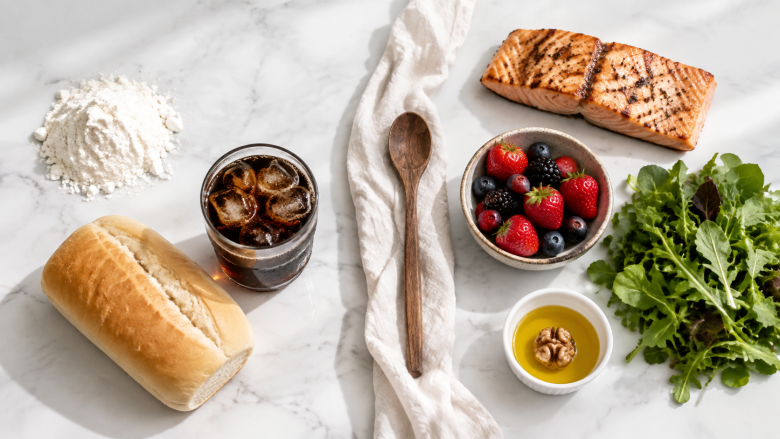
What Is Inflammation — and Why Should You Care About Your Diet?
Inflammation is your body’s natural defense mechanism. When you get a paper cut, the redness and swelling are acute inflammation — a short-term, helpful response. The problem is chronic, low-grade inflammation that lingers for months or years, silently contributing to conditions like heart disease, type 2 diabetes, and arthritis. Diet plays a direct role in either fueling or dampening that fire.
Most anti-inflammatory advice starts with a long list of exotic ingredients — turmeric, acai, matcha, ginger shots — and a strict 7-day meal plan. If you’re like most people, that approach feels overwhelming and expensive. The truth is, you don’t need a kitchen overhaul or a specialty grocery store. You need five simple swaps that use everyday foods.
Here’s the thing nobody tells you: the most powerful anti-inflammatory foods are probably already in your kitchen. You just need to use them differently. Let me show you how.
Why Most Anti-Inflammatory Advice Fails Beginners
When I first tried an anti-inflammatory diet, I made the mistake of buying a bag of turmeric root, a jar of moringa powder, and a bottle of tart cherry juice. I spent $60 in one trip. A week later, the turmeric had gone bad, the moringa tasted like grass, and I was back to my usual meals. That’s when I realized the problem wasn’t my willpower — it was the advice itself.
Competing articles often recommend “eat the rainbow” or “include omega-3s,” but they skip the practical barriers: cost, time, and confusion over what counts. A recent CDC report found that nearly half of U.S. adults are trying to eat healthier, yet only 1 in 10 meets fruit and vegetable recommendations. The gap isn’t knowledge — it’s execution.
Most people don’t realize that you don’t have to eliminate all processed foods overnight. You just need to shift the balance. A 2019 study in the Journal of the American College of Nutrition showed that replacing just one serving of ultra-processed food per day with a whole food significantly reduced inflammatory markers over 8 weeks. Small changes compound.
5 Simple Swaps to Start Today
These swaps are designed for real life — minimal effort, low cost, and zero exotic ingredients. Pick one to start. Add another when that feels comfortable. You don’t have to do all five at once.
Swap #1: Replace Vegetable Oil with Olive Oil or Avocado Oil
Vegetable oils (soybean, corn, canola) are high in omega-6 fatty acids. While omega-6s are essential, the modern diet contains far too many relative to omega-3s, creating a pro-inflammatory imbalance. Olive oil, especially extra-virgin, is rich in monounsaturated fats and polyphenols that reduce inflammation.
Practical tip: Use olive oil for salad dressings and low-heat cooking. For high-heat frying (above 375°F), avocado oil is a better choice because it has a higher smoke point. Most people don’t realize that heating olive oil past its smoke point can create harmful compounds — so don’t deep-fry with it.
Trade-off: Olive oil is more expensive than vegetable oil, but a little goes a long way. Buy a mid-range bottle; you don’t need the $30 estate variety. Store it in a dark cabinet to prevent oxidation.
Swap #2: Add One Vegetable to Every Meal
This is the single highest-impact, lowest-effort change. Vegetables provide fiber, vitamins, and phytochemicals that directly lower inflammatory markers. You don’t need to hit a magic number of servings — just one extra portion per meal makes a difference.
Breakfast: Throw a handful of spinach into your scrambled eggs. Lunch: Add a cup of mixed greens to your sandwich or wrap. Dinner: Steam a bag of frozen broccoli or roast carrots alongside your protein.
Frozen vegetables are just as nutritious as fresh — sometimes more, because they’re picked at peak ripeness. They’re also cheaper and last longer. For a deeper look at specific veggies, check our Asparagus Nutrition Calculator to see how much fiber and vitamin K you’re getting from a serving.
Edge case: If you have digestive issues like IBS, start with low-FODMAP options like carrots, zucchini, or bell peppers. Not all vegetables are equally tolerated.
Swap #3: Replace Sugary Drinks with Water or Herbal Tea
Sugar-sweetened beverages (soda, sweet tea, sports drinks) are directly linked to higher levels of C-reactive protein (CRP), a key inflammation marker. A 2014 study in the European Journal of Clinical Nutrition found that reducing sugary drink intake by just one serving per day lowered CRP by 11% over 12 months.
This swap is simple: drink water, plain sparkling water, or unsweetened herbal tea. If you crave flavor, add lemon, cucumber, or mint. Herbal teas like ginger, chamomile, and green tea also provide anti-inflammatory compounds.
Most people don’t realize that artificial sweeteners (aspartame, sucralose) may still trigger inflammatory responses in some individuals. A 2017 review in Nutrients suggested that non-nutritive sweeteners can alter gut microbiota and potentially promote inflammation. Stick with unsweetened options.
Swap #4: Swap Refined Grains for Whole Grains
Refined grains (white bread, white rice, pasta) spike blood sugar and insulin, which can promote inflammation. Whole grains (brown rice, oats, quinoa, whole wheat) provide fiber that feeds beneficial gut bacteria, producing short-chain fatty acids that reduce inflammation.
Practical swap: Replace white rice with brown rice or quinoa. Use whole-grain bread instead of white. If you eat oatmeal, choose steel-cut or rolled oats over instant packets (which often contain added sugar).
Trade-off: Whole grains take longer to cook. Batch-cook a large pot of brown rice or quinoa on Sunday and use it throughout the week. For a quick option, frozen whole-grain rice pouches are widely available and take 90 seconds in the microwave.
Beginner tip: Don’t go 100% whole grain overnight. Start with a 50/50 mix of white and brown rice, then gradually increase the whole-grain portion. Your digestive system may need time to adjust to the extra fiber.
Swap #5: Replace Processed Snacks with Nuts, Seeds, or Fruit
Processed snacks — chips, cookies, crackers — are typically high in refined oils, sugar, and salt, all of which contribute to inflammation. Nuts (almonds, walnuts) and seeds (chia, flax, pumpkin) are rich in healthy fats, fiber, and antioxidants. Walnuts, in particular, are a top source of alpha-linolenic acid (ALA), a plant-based omega-3.
Swap idea: Instead of chips, have a small handful of almonds and an apple. Instead of a granola bar (which often has added sugar), try a piece of fruit with a tablespoon of peanut butter.
Cost tip: Buy nuts in bulk from the bulk bin section — they’re often cheaper. Store them in the freezer to prevent rancidity. Chia seeds can be added to yogurt, oatmeal, or smoothies for a fiber boost.
One thing nobody tells you: Portion control matters. Nuts are calorie-dense. A serving is about 1 ounce (a small handful). Overeating nuts can lead to weight gain, which itself promotes inflammation. So enjoy them, but mind the quantity.
How to Make These Swaps Stick (Without Overwhelm)
The biggest barrier I see with clients isn’t knowledge — it’s consistency. Here’s a framework I call the “One Swap Rule”: pick one swap from the list above and commit to it for two weeks. Do not attempt more than one. After two weeks, if it feels automatic, add another. If it doesn’t, troubleshoot why.
Common roadblocks and fixes:
- Cost: Frozen vegetables and bulk grains are cheap. Compare prices per serving — a bag of frozen broccoli costs about $0.50 per serving, while a fast-food meal costs $8.
- Time: Pre-cut veggies (fresh or frozen) save prep time. Batch-cook grains twice a week.
- Taste: Your palate adapts. After about 10 days of using olive oil instead of vegetable oil, you’ll find the old oil tastes greasy. Same with whole grains — your taste buds adjust.
- Social situations: You don’t need to be perfect. If you’re at a party and the only option is white bread, eat it. The goal is progress, not perfection.
For a personalized look at your energy needs while making these changes, try our Energy Nutrition Calculator to see how many calories and nutrients you need daily. It’s a helpful baseline.
The Science in Plain Language: Why These Foods Work
You don’t need a biochemistry degree to understand why these swaps help. Here’s the simple version:
- Omega-3s (in walnuts, flax, fish) reduce the production of inflammatory molecules called cytokines. They essentially tell your immune system to calm down.
- Antioxidants (in fruits, vegetables, tea) neutralize free radicals — unstable molecules that damage cells and trigger inflammation.
- Fiber (in whole grains, vegetables, nuts) feeds your gut bacteria, which produce anti-inflammatory compounds like butyrate.
- Polyphenols (in olive oil, spices, berries) inhibit the activity of enzymes that promote inflammation.
Most people don’t realize that inflammation isn’t always bad. Acute inflammation is how you heal from an infection or injury. The goal is to reduce chronic, unnecessary inflammation — not eliminate it entirely. That’s why these swaps focus on balance, not deprivation.
If you enjoy cooking with spices, turmeric and ginger can add flavor and additional anti-inflammatory benefits. However, they’re not magic. Turmeric’s curcumin is poorly absorbed unless eaten with black pepper and fat. A 2017 review in Foods noted that the bioavailability of curcumin is less than 1% without enhancers. So don’t rely on turmeric alone — use it as a complement to the swaps above. For a quick way to check the nutritional profile of a curry dish, see our Curry Nutrition Calculator.
Common Misconceptions and Pitfalls
Myth: You have to cut out all dairy. Dairy is not inherently inflammatory. Some people are lactose intolerant or sensitive to casein, but for most, moderate amounts of yogurt or cheese are fine. In fact, fermented dairy like yogurt can support gut health.
Myth: Gluten causes inflammation in everyone. Gluten only triggers inflammation in people with celiac disease or non-celiac gluten sensitivity. For the general population, whole grains containing gluten (like whole wheat) are anti-inflammatory because of their fiber content.
Myth: You need supplements. While omega-3 supplements can help if you don’t eat fish, whole foods provide a complex mix of nutrients that work synergistically. A 2020 review in Antioxidants concluded that dietary patterns (like the Mediterranean diet) are more effective than isolated supplements for reducing inflammation.
Pitfall: Doing too much too fast. I’ve seen people try to go vegan, gluten-free, sugar-free, and dairy-free all at once. They last three days. Start with one swap. Build confidence. Then expand.
When to Expect Results — Realistic Timelines
Inflammation doesn’t disappear overnight. Here’s what you can reasonably expect:
- 1–2 weeks: You may notice improved digestion, more energy, and less bloating. These are early signs your gut is adapting.
- 4–8 weeks: If you have joint pain or skin issues (like eczema), you might see gradual improvement. A 2013 study in Arthritis Research & Therapy found that a Mediterranean diet reduced CRP by 20–30% in 6 weeks.
- 3–6 months: More consistent changes in blood markers (CRP, IL-6) if measured. Weight loss, if needed, can further reduce inflammation.
If you don’t notice changes after 8–12 weeks, consider factors outside diet: stress, sleep quality, and physical activity. Chronic stress elevates cortisol, which can promote inflammation. Poor sleep disrupts immune regulation. Addressing these alongside diet amplifies results.
For gentle movement to support your anti-inflammatory efforts, check out our Simple Daily Stretching Routine for Flexibility. Even 10 minutes of stretching can lower cortisol and improve circulation. And for sleep, see our guide on How to Improve Sleep with Simple Bedroom Changes — a dark, cool room can reduce nighttime inflammation.
Next Steps: Your 7-Day Action Plan (No Meal Prep Required)
You don’t need a detailed meal plan. Instead, use this template:
- Day 1–2: Swap your cooking oil. Use olive oil for all low-heat cooking and dressings.
- Day 3–4: Add one vegetable to lunch and dinner. Keep it simple — a handful of spinach or a side of frozen broccoli.
- Day 5–6: Replace one sugary drink per day with water or herbal tea.
- Day 7: Reflect. Which swap felt easiest? Which was hardest? Adjust accordingly.
After week one, add swap #4 (whole grains) or swap #5 (healthy snacks). Track your progress with a simple journal or the Energy Nutrition Calculator to see how your macro balance shifts over time.
Final Thoughts
Anti-inflammatory eating doesn’t have to be complicated, expensive, or restrictive. The five swaps in this guide are backed by science and designed for real life. They’re the entry point — not the finish line. Once these become habits, you can explore more advanced changes like intermittent fasting, eliminating specific trigger foods, or adding fermented foods.
Remember: consistency beats intensity. One small swap done daily for a month is more powerful than a perfect diet you follow for three days. Start with one. Let it stick. Then build.
Disclaimer: This article is for informational purposes only and does not constitute medical advice. Consult with a healthcare provider before making significant dietary changes, especially if you have a chronic condition or are taking medication.