Why the Plate Method Keeps Failing You (and How to Fix It)
When I first tried the balanced plate method, I was fresh out of nutrition school and convinced I had it figured out. Half the plate veggies, a quarter protein, a quarter carbs. Simple, right? Except my “healthy” plate looked like a sad cafeteria tray, and I was hungry an hour later. The thing nobody tells you about the plate method is that it was designed for a perfectly square, flat plate in a controlled environment. Real life involves dips, sauces, breakfast bowls, and takeout containers.
Most people don’t realize that the classic 1/2-1/4-1/4 ratio is just a starting point. The confusion comes when you try to apply it to a meal with a drizzle of olive oil, a glass of wine, or a side of fruit. I’ve seen clients meticulously measure their broccoli while ignoring the 300-calorie salad dressing. The plate method isn’t broken — it’s just incomplete. So let me show you the version I actually use with clients, one that accounts for the messy, delicious reality of eating.
By the end of this article, you’ll have a visual hierarchy that works for any meal, any diet, and any setting — no counting, no apps, no guilt. And if you want to crunch the numbers behind your choices, our Energy Nutrition Calculator can help you dial in portions without overthinking.
What Is the Balanced Plate Method? (The Short Version)
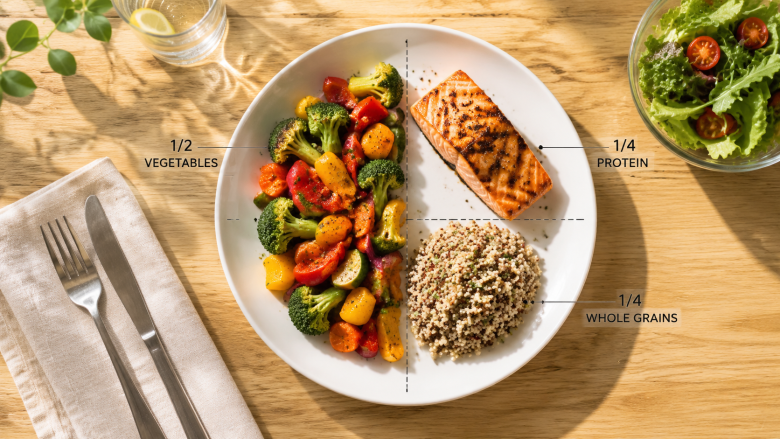
The balanced plate method (also called the plate method or plate model) is a visual tool for building a meal that includes all major nutrients without needing a scale or calculator. The classic rule: fill half your plate with non-starchy vegetables, one quarter with lean protein, and one quarter with complex carbohydrates. That’s it. No calorie counting, no macros.
The Harvard Healthy Eating Plate, developed by nutrition experts at the Harvard T.H. Chan School of Public Health, is the most cited version. It adds a few extras: healthy oils, water, and activity. But it still leaves out fats, sauces, and the practicalities of eating out. The ILD Nutrition Manual’s plate method is similar but focuses on diabetes management. Both are great — but they don’t tell you what to do when you’re eating a burrito bowl or a smoothie.
Here’s where the confusion creeps in. Some online resources incorrectly show four equal sections (25% each), which is a common mistake. The standard, evidence-based approach is three zones: 1/2 vegetables, 1/4 protein, 1/4 carbs. That’s what we’ll use as our foundation.
The 3-Zone + Fat Drizzle Hack: Your Visual Hierarchy
After years of coaching, I developed a simple mental model I call the “3-Zone + Fat Drizzle” method. It solves the fat confusion and makes the plate method work for any cuisine.
Zone 1: Vegetables (1/2 the plate)
These are non-starchy vegetables — think leafy greens, broccoli, bell peppers, cauliflower, zucchini, asparagus, tomatoes, cucumbers. The goal is volume and color. Starchy vegetables like potatoes, corn, and peas belong in the carb zone, not here. A common mistake: treating the vegetable zone as a dumping ground for iceberg lettuce and a few cherry tomatoes. Go for diversity. Aim for at least three different colors in this zone.
Zone 2: Protein (1/4 of the plate)
This is your satiety anchor. Lean meats (chicken, turkey, fish), eggs, tofu, tempeh, legumes, or dairy. The portion size is roughly the size and thickness of your palm (for most people, 3–4 ounces cooked). If you’re plant-based, you’ll need to combine sources or use a complete protein like quinoa or soy.
Zone 3: Carbohydrates (1/4 of the plate)
Complex carbs: whole grains (brown rice, quinoa, oats, barley), starchy vegetables (sweet potato, peas, winter squash), legumes, or whole-grain bread. The portion is about the size of your cupped hand. If you’re active or have higher energy needs, you can bump this up slightly, but keep the visual boundary.
The Fat Drizzle
Here’s the hack: add a small “drizzle” of healthy fat — about 1 tablespoon (or a thumb-sized amount). This could be olive oil, avocado, nuts, seeds, or a creamy dressing. Visually, it’s a thin stream across the vegetable zone, not a separate quadrant. This keeps total fat in check while still getting the flavor and nutrient absorption benefits. Most people don’t realize that fat is essential for absorbing fat-soluble vitamins (A, D, E, K) from all those vegetables. Without the drizzle, you’re literally wasting some of the nutrients.
For sauces like marinara, salsa, or yogurt-based dressings, treat them as part of the vegetable zone (they add moisture but don’t significantly change the ratios). For creamy or oil-based sauces (like alfredo or ranch), count them as part of your fat drizzle or use a smaller amount.
Adapting the Plate Method for Different Diets (Real-World Swaps)
The generic plate method works for a standard omnivore, but what if you’re vegan, diabetic, or gluten-free? The visual zones stay the same, but the contents change. Here’s a Plate Swap Chart I use with clients.
| Diet | Protein Zone (1/4) | Carb Zone (1/4) | Fat Drizzle |
|---|---|---|---|
| Standard | Grilled chicken, salmon, eggs | Brown rice, quinoa, sweet potato | Olive oil, avocado |
| Vegan | Tofu, tempeh, lentils, chickpeas | Quinoa, brown rice, lentils (yes, they can be both protein and carb — adjust portion) | Nut butter, tahini, flaxseed oil |
| Diabetic | Skinless poultry, fish, tofu | Non-starchy veggies (increase), legumes, barley (lower glycemic) | Avocado, olive oil (limit to 1 tsp) |
| Gluten-free | Same as standard | Quinoa, rice, corn, gluten-free oats, buckwheat | Same as standard |
| Keto | Full-fat meat, eggs, fatty fish | Replace with non-starchy veggies (increase vegetable zone to 3/4) | Butter, coconut oil, heavy cream (increase to 2 tbsp) |
Note: For vegan protein, swapping rice for lentils is a smart move because lentils provide both protein and fiber, reducing the need for a separate carb. But be careful with portion sizes — legumes are calorie-dense. Our Curry Nutrition Calculator can help you estimate the macros of a lentil-based curry bowl.
Breakfast, Snacks, and Eating Out: Applying the Plate Method Beyond Dinner
The classic plate method is often taught for lunch and dinner, but what about the other eating occasions? That’s where most people get stuck. Here’s how to adapt the visual hierarchy.
Breakfast
Breakfast doesn’t fit on a dinner plate, but you can still use the ratios. Think of a bowl: half the bowl should be vegetables or fruit (depending on your preference), a quarter protein (eggs, Greek yogurt, tofu scramble), and a quarter carbs (oats, whole-grain toast, or a small banana). The fat drizzle could be nut butter on toast or avocado in a scramble. One of my favorite breakfasts: a veggie omelet (half the plate) with a side of whole-grain toast (quarter) and a small dollop of Greek yogurt (quarter).
If you’re doing a smoothie, treat it as a blended plate: 1/2 greens and fruit (veggies zone), 1/4 protein powder or yogurt, 1/4 carbs from fruit or oats, plus a drizzle of nut butter or seeds. The visual is in the ingredient ratios, not the plate.
Snacks
Snacks don’t need to follow the full plate method, but you can use a mini version. Aim for two components: a protein/fat and a veggie or fruit. For example, apple slices with almond butter (carb + fat/protein), or carrot sticks with hummus (veggie + protein/fat). Avoid the common trap of “healthy” snacks that are all carbs (granola bars, crackers).
Dining Out
Eating out is the ultimate test of the plate method. The typical restaurant plate is oversized and loaded with hidden fats and sugars. Here’s my strategy: order a protein and a vegetable side, then ask for a half-portion of the starch or swap it for an extra vegetable. If you’re at a Mexican restaurant, build a bowl: skip the rice (or take half), load up on fajita veggies, add beans or chicken, and top with salsa and a little guacamole (fat drizzle). The visual zones still apply — just mentally divide the plate.
One thing that can go wrong: asking for substitutions and getting a tiny portion of vegetables. Ask for double veggies and clarify “no butter” or “steamed.” Most restaurants are happy to accommodate.
Common Mistakes and How to Fix Them
Over the years, I’ve seen the same patterns trip people up. Here are the most common pitfalls and how to navigate them.
Mistake 1: The “Four Equal Sections” Fallacy
Some infographics show a plate split into four equal quarters — 25% each for veggies, protein, carbs, and fruit. This is not the balanced plate method. Fruit is a carbohydrate source and should be included in the carb zone or eaten as a snack. Dividing the plate into four equal sections reduces the vegetable portion and increases the carb portion, which can lead to blood sugar spikes and less satiety. Stick to the 1/2-1/4-1/4 rule.
Mistake 2: Ignoring the Fat Drizzle
I’ve had clients who follow the plate method perfectly but still feel hungry and unsatisfied. The culprit? No fat. They’d use fat-free dressing and skip the avocado. Healthy fats are crucial for satiety and nutrient absorption. The fat drizzle is not optional — it’s part of the method. Just keep it to one tablespoon.
Mistake 3: Overloading on Sauces and Drinks
What about the sauce on your stir-fry? Or the glass of wine with dinner? These are not part of the visual plate, but they add calories and can throw off your balance. The rule of thumb: keep sauces to 2 tablespoons max, and treat beverages as separate. A glass of water or unsweetened tea is fine. For alcohol, limit to one serving and account for it as an extra — not a replacement for any zone. If you’re tracking calories, our Asparagus Nutrition Calculator can help you see how sauces and sides add up.
Mistake 4: Portion Distortion
The plate method is visual, but it’s easy to oversize the plate itself. A standard dinner plate should be 9–10 inches in diameter. If you’re using a 12-inch plate, you’ll naturally fill it with more food. Switch to a smaller plate — or simply leave a one-inch border around the edge. Your brain will still register the visual zones, but the actual volume will be appropriate.
When the Plate Method Doesn’t Work (And What to Do Instead)
No method is perfect for every situation. The plate method assumes you’re eating a single, composed meal on a plate. But what about:
- Soups and stews: Use the bowl method. Fill half with vegetables and broth, a quarter with protein, a quarter with carbs (like potatoes or barley). The fat drizzle can be a swirl of olive oil on top.
- Salads in a bowl: Build the salad like a plate: half greens and veggies, quarter protein (chicken, chickpeas), quarter carb (croutons, quinoa). Add a tablespoon of dressing as the fat.
- Wraps and sandwiches: Use the fillings as the zones. The bread or wrap acts as the carb zone. Aim for a ratio of 2:1:1 (veggies:protein:carbs) by volume inside the wrap.
- One-pot meals (stir-fries, pasta bakes): Pre-portion the dish using the plate method after cooking. Spoon out 1/2 vegetables, 1/4 protein, 1/4 carbs from the pot.
If you have a medical condition like kidney disease or need precise macronutrient ratios, the visual plate method may not be precise enough. In those cases, work with a registered dietitian and consider using a tool like our Energy Nutrition Calculator to get exact numbers. But for 90% of people, the plate method is a sustainable, stress-free approach.
The 2-Minute Lunch Assembly Guide
Here’s a practical framework I use in my own kitchen. It takes two minutes once you have the ingredients prepped.
- Start with the vegetable zone. Grab a handful of leafy greens (spinach, arugula) or roasted non-starchy veggies. Place them on half the plate.
- Add the protein. Place a palm-sized portion of your protein source (chicken, tofu, eggs) on one quarter of the plate.
- Add the carb. Fill the remaining quarter with a cupped handful of cooked grains, sweet potato, or legumes.
- Drizzle the fat. Add a tablespoon of olive oil, a quarter avocado, or a spoonful of seeds/nuts over the veggies.
- Optional: Add a low-calorie sauce. A splash of vinegar, lemon juice, salsa, or a dollop of yogurt counts as flavor, not a separate zone. Keep it to 2 tablespoons.
That’s it. No counting, no confusion. The visual hierarchy does the work for you.
Why This Method Works (The Science, Briefly)
The plate method isn’t just a fad — it’s backed by decades of nutritional science. The high vegetable volume increases fiber intake, which slows digestion and promotes fullness. The protein portion supports muscle maintenance and satiety. The controlled carb portion prevents blood sugar spikes. The fat drizzle ensures you absorb fat-soluble nutrients and feel satisfied.
Studies consistently show that people who use visual portion control methods eat fewer calories without feeling deprived, compared to those who count calories or follow restrictive diets. The plate method is a prime example of changing the environment rather than willpower. You don’t need to be perfect — you just need to see the zones.
Putting It All Together: A Week of No-Confusion Meals
To show you how adaptable this is, here’s a sample day using the 3-Zone + Fat Drizzle method across different diets.
Standard Omnivore
- Breakfast: Scrambled eggs (protein) with sautéed spinach and mushrooms (veggies), plus a slice of whole-grain toast (carb) and a drizzle of olive oil.
- Lunch: Grilled chicken over mixed greens with cherry tomatoes and cucumber (veggies), quinoa (carb), and a tablespoon of tahini dressing (fat).
- Dinner: Baked salmon (protein), roasted broccoli and bell peppers (veggies), and a small sweet potato (carb) with a pat of butter (fat).
Vegan
- Breakfast: Tofu scramble with spinach and mushrooms (protein + veggies), a side of oats (carb) with a tablespoon of almond butter (fat).
- Lunch: Lentil soup (protein + carb) with a side of steamed kale (veggies) and a drizzle of flaxseed oil (fat).
- Dinner: Chickpea curry (protein) with cauliflower rice (veggies) and a small portion of brown rice (carb) with coconut cream (fat).
Diabetic-Friendly
- Breakfast: Greek yogurt (protein) mixed with berries (veggie/fruit) and a small sprinkle of chopped nuts (fat). No carb zone needed — the berries are minimal.
- Lunch: Turkey lettuce wraps (protein) with extra lettuce and cucumber (veggies), plus a side of half a cup of lentils (carb).
- Dinner: Grilled shrimp (protein) over a large salad of romaine, tomatoes, and avocado (veggies + fat), with a side of steamed broccoli (veggies). No additional carb zone — keep blood sugar stable.
Final Thoughts: Ditch the Guilt, Keep the Visual
The balanced plate method is not a diet — it’s a visual compass. When you lose the counting and focus on the zones, eating becomes easier, more enjoyable, and more sustainable. I’ve seen clients go from obsessing over every gram to simply looking at their plate and knowing they’re on track. That’s the power of the no-count, no-confusion approach.
If you want to pair this with gentle movement, check out our Simple Daily Stretching Routine for Flexibility — it complements the plate method by supporting digestion and reducing stress. And if sleep is an issue, our How to Improve Sleep with Simple Bedroom Changes guide can help you recover better after balanced meals.
Remember: the plate method is a tool, not a test. Use it when it helps, and don’t stress when it doesn’t. Your body knows what it needs — the plate just helps you see it.