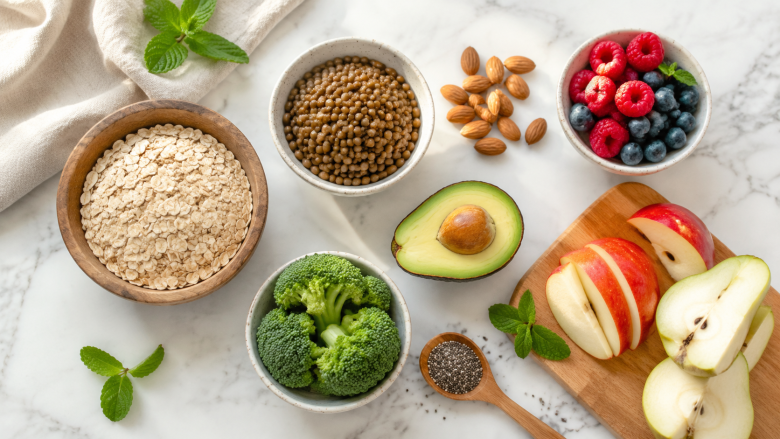
Why Most Fiber Lists Fail You
When I first tried to eat more fiber, I did what everyone does: I Googled “high-fiber foods” and found a wall of beans, brussels sprouts, and turnip greens. I bought a bag of chia seeds, stared at it, and had no idea how to actually use them without making a slimy mess. Three days later, I was bloated, constipated, and back to white bread.
The problem isn’t knowing which foods are high in fiber. It’s knowing how to eat them simply, affordably, and without wrecking your digestion. This article is the list I wish I’d had: common foods, exact fiber grams per portion, no-cook or minimal-prep ideas, and the real-world pitfalls nobody warns you about.
Here’s the core truth: you don’t need exotic superfoods. You need a few reliable staples, a plan for adding them slowly, and a water bottle. Let’s get into it.
What Simple Foods Have a Lot of Fiber?
If you’re asking this question, you want foods you can find at any grocery store, recognize instantly, and eat with zero cooking skills. The answer is shorter than you think.
Start with these five. Each one is cheap, shelf-stable, and gives you a meaningful fiber boost in a single serving:
- Oats (rolled or quick): 1 cup cooked = 4g fiber. No cooking? Overnight oats with milk and a spoon of peanut butter.
- Apples (with skin): 1 medium = 4.4g fiber. Eat it whole. Don’t peel it.
- Carrots (raw): 1 medium = 1.7g fiber, but 1 cup chopped = 3.6g. Dip in hummus for a double hit.
- Black beans (canned, drained): ½ cup = 8g fiber. Rinse them to cut sodium. Add to salads or just eat warm with salt.
- Chia seeds: 2 tablespoons = 10g fiber. Stir into yogurt, oatmeal, or water (let sit 10 minutes to avoid choking).
The thing nobody tells you: portion sizes matter more than the food itself. A tablespoon of chia seeds is 5g fiber. Two tablespoons is 10g. If you’re not used to it, start with one tablespoon and see how you feel.
The 10 Highest-Fiber Foods (That You’ll Actually Eat)
Most lists of “top 10 high-fiber foods” include things like dried goji berries or psyllium husk powder. Those are fine, but they’re not what most people keep in their pantry. Here are ten foods that are realistically accessible, affordable, and easy to prepare:
- Lentils (cooked, 1 cup) — 15.6g fiber. Canned lentils exist. Rinse and toss into soup or pasta sauce.
- Black beans (cooked, 1 cup) — 15g fiber. Canned version works. Use in tacos, burrito bowls, or just with rice.
- Chia seeds (2 tbsp) — 10g fiber. Make a quick pudding: 2 tbsp chia + ½ cup milk + a dash of vanilla. Stir, wait 15 minutes, eat.
- Almonds (1 oz, about 23 nuts) — 3.5g fiber. No prep. Portable.
- Oats (1 cup cooked) — 4g fiber. See above.
- Apples (1 medium) — 4.4g fiber. The skin is where the fiber lives.
- Broccoli (1 cup chopped, cooked) — 5.1g fiber. Frozen broccoli is just as good. Steam in a bag in the microwave.
- Brussels sprouts (1 cup, cooked) — 4g fiber. Roast at 400°F with olive oil and salt until crispy. That’s it.
- Pear (1 medium) — 5.5g fiber. Sweeter than an apple, same ease.
- Popcorn (3 cups air-popped) — 3.5g fiber. Skip the butter bath. Use a little salt or nutritional yeast.
Notice a pattern? Most of these foods come from the produce aisle or the bulk section. They’re not trendy. They’re reliable. For a more precise breakdown of fiber in specific foods, you can use our Corn Fiber Calculator—it’s not just for corn; it’s a tool to estimate fiber content in various grains.
How to Eat More Fiber Today (Without a Recipe)
You don’t need to cook elaborate meals. Here are three swaps that take 30 seconds each:
- Swap white bread for whole wheat bread — 2 slices whole wheat = 4g fiber vs. 1g in white. Same sandwich, triple the fiber.
- Swap white rice for oats (or quinoa) — 1 cup cooked white rice = 0.6g fiber. 1 cup cooked oats = 4g fiber. If you miss rice, try half oats half rice.
- Swap sugary cereal for oatmeal — 1 cup of sugary cereal = 1g fiber. 1 cup oatmeal = 4g fiber. Add berries and you’re at 6g.
Another easy trick: add a handful of spinach to your scrambled eggs or smoothie. 1 cup raw spinach = 0.7g fiber, but it adds up. And if you’re eating a salad, throw in some canned lentils or chickpeas. One cup of chickpeas has 12.5g fiber.
When I first started, I tried to add all these at once and ended up with gas so bad I thought I had a medical issue. The mistake was going from 10g fiber a day to 40g overnight. Your gut needs time to adjust. Increase by 5g per day, wait a week, then add another 5g.
The Bloating Trap: How to Add Fiber Without Pain
Most people don’t realize that the biggest barrier to eating more fiber isn’t taste or cost — it’s discomfort. Bloating, gas, cramping, even constipation if you add fiber too fast without enough water. This is the number one reason people quit.
Here’s a practical plan that worked for me and dozens of clients I’ve coached:
- Increase by 5g per day per week. If you’re at 12g now, aim for 17g for the next seven days. Then 22g, then 27g, etc.
- Drink water with every fiber addition. Fiber absorbs water. Without it, you’ll get constipated. Aim for an extra 8 oz of water for every 5g of fiber you add.
- Spread fiber across the day. Don’t eat 20g in one meal. Split it: 5g breakfast, 5g lunch, 10g dinner.
- Choose soluble fiber sources for gentler digestion. Soluble fiber (oats, apples, carrots, beans) dissolves in water and forms a gel. Insoluble fiber (wheat bran, nuts, skins of fruits) is rougher. If you’re sensitive, lean toward soluble at first.
One edge case: if you have irritable bowel syndrome (IBS) or a history of bowel obstructions, check with a doctor before making big changes. Some people react poorly to beans or cruciferous vegetables. In that case, focus on soluble fiber from oats, bananas, and cooked carrots.
Easy High-Fiber Meals (No Cooking Required)
You asked for simple foods? Here are four meals that involve zero cooking and take under five minutes:
- Overnight oats: ½ cup rolled oats + ½ cup milk + 1 tbsp chia seeds + 1 tbsp peanut butter. Stir, refrigerate 4 hours or overnight. Eat cold. Fiber: ~12g.
- Apple with peanut butter: 1 apple (skin on) + 2 tbsp peanut butter. Fiber: ~7g.
- Bean salad: ½ can black beans (rinsed) + ½ cup corn + ½ avocado (mashed) + lime juice. Fiber: ~12g.
- Yogurt bowl: 1 cup Greek yogurt + 1 tbsp chia seeds + ½ cup raspberries. Fiber: ~8g.
These aren’t gourmet. They’re survival food for busy people. And they work.
If you want to track your fiber intake more precisely, our Greek Fiber Calculator can help you estimate the fiber in yogurt-based snacks, and the Energy Nutrition Calculator gives a broader view of your macros including fiber.
What Basic Foods Are High in Fiber? (The Pantry List)
This is the list you can print and stick to your fridge. These are the cheapest, most basic foods you can buy at any supermarket:
| Food | Serving Size | Fiber (g) |
|---|---|---|
| Oats (rolled) | 1 cup cooked | 4 |
| Lentils (canned, rinsed) | 1 cup | 15.6 |
| Black beans (canned) | ½ cup | 8 |
| Chickpeas (canned) | 1 cup | 12.5 |
| Apple (with skin) | 1 medium | 4.4 |
| Pear | 1 medium | 5.5 |
| Carrot (raw) | 1 cup chopped | 3.6 |
| Broccoli (frozen, cooked) | 1 cup | 5.1 |
| Almonds | 1 oz (23 nuts) | 3.5 |
| Chia seeds | 2 tbsp | 10 |
| Popcorn (air-popped) | 3 cups | 3.5 |
| Whole wheat bread | 2 slices | 4 |
Notice that most of these are either canned, frozen, or shelf-stable. That’s by design. Fresh produce is great, but it spoils. Canned beans and frozen vegetables are just as nutritious and much more forgiving.
Soluble vs. Insoluble Fiber: Why It Matters
You’ll see this distinction in every fiber article, but here’s the practical breakdown: soluble fiber feeds your gut bacteria and helps lower cholesterol. Insoluble fiber adds bulk and prevents constipation. You need both.
Most foods contain a mix. Oats are roughly 50/50. Beans are mostly soluble. Apples have both, but the skin is mostly insoluble. If you’re trying to lower your cholesterol, eat more oats, beans, and barley. If you’re constipated, eat more vegetables, nuts, and whole grains.
The mistake people make: they assume all fiber is the same. It’s not. If you eat only insoluble fiber (like wheat bran) without soluble fiber, you might get a lot of gas and no real benefit. And if you eat only soluble fiber, you might get bloated but still have trouble with regularity.
Balance is key. A simple rule: for every serving of fruit or vegetable (insoluble-rich), pair it with a serving of beans or oats (soluble-rich).
How Much Fiber Do You Actually Need?
The 2020-2025 Dietary Guidelines for Americans recommend 14g of fiber per 1,000 calories. For most women, that’s about 25g per day. For men, 38g. But here’s the catch: the average American eats only 15g. So the gap is huge.
If you’re starting from 15g, don’t try to hit 25g tomorrow. Go to 20g first. That’s one apple and a bowl of oatmeal. Then add a half-cup of beans the next week. Use the Halibut Fiber Calculator to see how fish (a low-fiber food) compares to plant-based options — it helped me realize I was eating too much protein without fiber.
Another thing: fiber supplements (psyllium, inulin) can help, but they’re not a substitute for real food. Whole foods give you vitamins, minerals, and phytochemicals that supplements don’t. Use supplements as a bridge, not a destination.
The Real-World Challenge: Eating Out and Traveling
When you’re eating out, fiber is scarce. A typical restaurant meal is white rice, white bread, or pasta, plus a protein and maybe a small vegetable. Here’s how to salvage it:
- Ask for a side of vegetables instead of fries. Most places will do steamed broccoli or green beans.
- Order a bean-based soup or chili as a starter. One cup of lentil soup can have 8g fiber.
- Bring your own snack: an apple, a handful of almonds, or a packet of instant oatmeal.
- If you’re at a fast-food place, choose a bean burrito or a salad with beans and extra veggies.
Traveling is harder. I’ve been on road trips where the only fiber option was a gas station apple. My solution: pack a small bag of chia seeds and a spoon. Mix with water or yogurt from a convenience store. It’s not glamorous, but it works.
Hydration: The Overlooked Partner
Fiber without water is like a sponge without water. It clumps up and causes blockage. Most people who complain about fiber causing constipation are simply not drinking enough.
How much water do you need? There’s no one-size-fits-all, but a good rule: add 8 oz of water for every 5g of fiber you eat above your baseline. If you’re at 25g total, aim for 8-10 cups of water per day. If you’re active or live in a hot climate, more.
Signs you’re not drinking enough: dark urine, dry mouth, feeling bloated after high-fiber meals. If you start feeling bloated after adding fiber, drink a glass of water and wait 30 minutes. If the bloating doesn’t subside, you might have added too much too fast.
Common Pitfalls (And How to Avoid Them)
- Pitfall 1: Eating too much fiber at once. Solution: gradual increase, as described.
- Pitfall 2: Not chewing thoroughly. Whole seeds (chia, flax) can pass through undigested if not ground or soaked. Chia seeds need at least 10 minutes in liquid. Flax seeds should be ground.
- Pitfall 3: Ignoring food intolerances. Some people can’t digest beans well. Try soaking dried beans overnight and changing the water before cooking. Or use canned beans and rinse thoroughly.
- Pitfall 4: Relying on processed “high-fiber” foods. Many bars and cereals add isolated fibers like inulin, which can cause gas. Check the label. If it says “chicory root fiber” or “inulin,” start with a small amount.
- Pitfall 5: Assuming all veggies are equal. Iceberg lettuce is 0.5g fiber per cup. Romaine is 1g. Kale is 2.5g. Choose darker greens.
One more thing: frozen vegetables are often more nutritious than fresh ones that have been sitting in a truck for days. Don’t shy away from the freezer aisle. Frozen peas, broccoli, and spinach are excellent fiber sources.
Putting It All Together: A Sample Day
Here’s what a simple, budget-friendly, high-fiber day looks like — no recipes, just assembly:
- Breakfast: 1 cup oatmeal (4g) + 1 tbsp chia seeds (5g) + ½ cup berries (2g) = 11g fiber.
- Lunch: 2 slices whole wheat bread (4g) + ½ cup canned black beans (8g) + lettuce and tomato = ~12g fiber.
- Snack: 1 apple (4.4g) + 1 tbsp peanut butter (1g) = 5.4g fiber.
- Dinner: 1 cup cooked lentils (15.6g) + 1 cup steamed broccoli (5g) = 20.6g fiber.
Total: 49g fiber. That’s a lot for a beginner. But notice: you can cut the lentils in half and still hit 41g. Or skip the afternoon snack. The point is, you can tailor it.
For a more precise breakdown of your daily intake, try the Curry Nutrition Calculator — it’s designed for fiber-rich legume dishes, but it works for any mixed meal.
The Bottom Line
Eating more fiber doesn’t require a culinary degree or a specialty grocery store. It requires knowing a few key foods, their exact fiber grams, and a slow, steady increase with plenty of water. The list I’ve given you is the same one I use today: oats, beans, apples, carrots, chia seeds, broccoli, lentils, almonds, pears, popcorn. That’s it. Rotate them, mix them, and you’ll hit your target without drama.
Remember: the goal isn’t perfection. It’s one more gram than yesterday. Start with one swap, see how you feel, and build from there. Your gut will thank you — slowly.