Intuitive Eating Is Not an Anti-Nutrition Free-for-All
The biggest misconception about intuitive eating is that it throws nutrition out the window. Clients tell me all the time: “If I eat intuitively, I’ll just eat pizza and ice cream forever.” That fear is understandable, but it’s based on a misreading of what intuitive eating actually asks of you.
Intuitive eating is about reconnecting with your body’s internal hunger and fullness signals after years of overriding them with external food rules. It doesn’t say “nutrition doesn’t matter.” It says the opposite: true nutrition — the kind your body can actually use — becomes possible only when you stop treating food as a moral test.
Here’s the practical version: you can honor a craving for pizza and still get the protein, fiber, and micronutrients your body needs. The two aren’t in conflict. In fact, when you combine them deliberately, you get something neither pure dieting nor pure “eat whatever” can offer: meals that satisfy both your taste buds and your biology.
This article walks through the intuitive eating basics with a simple nutrition framework you can use today. No macros to count, no food groups to demonize, no willpower required.
Why Traditional Dieting Breaks Your Hunger Signals
Before getting into the practical framework, it helps to understand why dieting makes intuitive eating feel impossible in the first place. When I first started working with clients, I assumed hunger was a simple biological signal. I learned quickly that it’s not.
Chronic dieting — especially restrictive dieting — scrambles your hunger hormones. Ghrelin (the hunger hormone) tends to spike in people who restrict, while leptin (the fullness hormone) becomes blunted. Research from the National Institute of Diabetes and Digestive and Kidney Diseases shows this is a physiological adaptation, not a willpower failure. Your body is trying to protect you from what it perceives as a famine.
This creates the classic diet cycle: you restrict, you obsess over food, you binge, you feel guilty, you restrict harder. Each cycle weakens your ability to notice gentle hunger (a subtle stomach growl) versus extreme hunger (a desperate, can’t-think-about-anything-else urgency).
Intuitive eating is the process of recalibrating those signals. But here’s what most guides don’t tell you: you can’t recalibrate hunger signals if the meals you’re eating are nutritionally hollow.
The Hidden Role of Blood Sugar in Hunger Cues
If you eat a meal that’s mostly refined carbs — say, a large bowl of pasta with minimal protein or fat — your blood sugar spikes and then crashes within a couple of hours. That crash produces a specific kind of hunger: urgent, shaky, snack-seeking. It feels like your body is starving, but it’s really a blood sugar rollercoaster.
This is why intuitive eating without basic nutrition awareness often fails. People start eating when they’re hungry, but their hunger is driven by unstable blood sugar, not genuine energy needs. They eat again, get another crash, and conclude their body can’t be trusted. The problem isn’t the body. It’s the meal composition.
When I work with clients, we fix this before anything else. Not with a diet plan, but with a simple plate-building skill that supports stable hunger signals.
The Cravings + Nutrient Density Framework
This is the core framework I use with every client who wants to practice intuitive eating without losing nutritional ground. I call it Cravings + Nutrient Density. It’s not a diet. There are no off-limits foods. It’s a meal-building strategy that assumes both things are true: your cravings carry information, and your body needs certain nutrients.
Step 1: Name the Craving
When you want a food, take thirty seconds to identify what you actually want. This sounds too simple, but it’s the step everyone skips. There’s a meaningful difference between craving ice cream because you want something cold and creamy, craving it because you’re exhausted, and craving it because you haven’t eaten enough today.
Ask yourself one question: “What does this food give me that I need right now?” The answers usually fall into a few buckets: energy (I’m hungry), texture (I want crunch or creaminess), taste (I want sweet or salty), comfort (I’m stressed or sad), or habit (I always eat this at 3pm).
Most people don’t realize that cravings are often proxy signals. A strong desire for salty, crunchy foods can mean you’re dehydrated or under-eating sodium. A persistent sweet craving can mean you’re not getting enough carbohydrates for your activity level. The craving isn’t an enemy to resist; it’s data to interpret.
Step 2: Honor the Craving and Add a Nutrient Anchor
Once you’ve named the craving, you honor it — no caveats. You eat the pizza, the ice cream, the chips, whatever it is. But you also add one or two nutrient-dense items to the same eating occasion. This is the “and” approach. It’s not “instead of.” It’s “and.”
Here’s what this looks like in practice:
- Craving pizza: eat the pizza, and add a side salad with olive oil and vinegar before or alongside it. The fiber and fat slow digestion, which reduces the blood sugar crash.
- Craving pasta with creamy sauce: eat the pasta, and add grilled chicken or chickpeas to the plate. The protein makes the meal more satiating, so you won’t be starving an hour later.
- Craving chocolate: eat the chocolate, and have a handful of almonds or a glass of milk with it. The protein and fat temper the sugar rush.
- Craving a breakfast of toast and jam: eat the toast, and add eggs or Greek yogurt on the side.
This sounds suspiciously like a diet rule, I know. The difference is in the framing. You’re not adding a salad because pizza is “bad” and you need to “make up for it.” You’re adding it because you want to feel good after the meal. The nutrient anchor is a tool for your own comfort, not a punishment.
Step 3: Evaluate the Aftermath
The final step of the framework is the one almost nobody does: check in with yourself 30 to 60 minutes after eating. How do you feel? Energized or sluggish? Satisfied or still hungry? Mentally clear or foggy?
This isn’t about guilt or judgment. It’s about building a body-mind feedback loop. When you eat pizza alone, you might notice a crash. When you eat pizza with a salad, you might notice more stable energy. That information is gold. It teaches your body — and your brain — what works.
Over time, this feedback loop naturally shifts your preferences. Not because you’ve restricted anything, but because you’ve learned that some food combinations make you feel physically better than others. This is the mechanism behind the well-documented finding from the National Institutes of Health that intuitive eaters tend to have higher diet quality over time.
Simple Plate Balancing: The 50-25-25 Visual
If you want a more structured approach to the nutrient anchor, use this visual guide. It’s not a rigid rule — it’s a default template that works well for most meals. You can adjust based on your activity level, your hunger, and your cravings.
The Visual Template
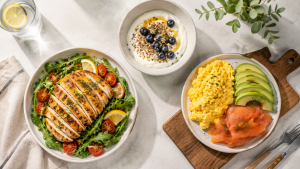
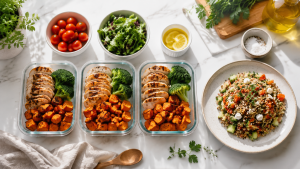
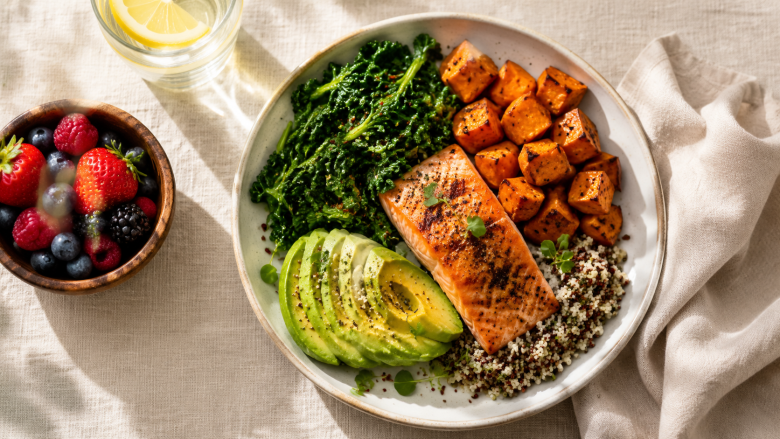
- Roughly half your plate: vegetables and fruits (fiber, vitamins, water)
- Roughly one-quarter: protein (meat, fish, eggs, beans, tofu, dairy)
- Roughly one-quarter: starches and grains (rice, potatoes, bread, pasta, quinoa)
This is the classic balanced plate approach promoted by Harvard’s T.H. Chan School of Public Health. It’s not new, and that’s the point. It works because it’s sustainable and simple.
Where the intuitive eating twist comes in: you don’t have to hit this ratio at every single meal. Some days you’ll want more starch. Some days you’ll want more protein. The plate is a starting point, not a prescription. Aim for it most of the time, and let your cravings dictate the rest.
How to Use This With Cravings
Let’s say you want a burrito bowl. The craving is for the rice, the beans, the salsa, maybe some cheese. The balanced plate version: start with a base of rice (starch), add beans or chicken (protein), pile on lettuce, tomatoes, and onions (vegetables), and add your favorite toppings. You’ve honored the craving and built a balanced meal in one step.
Or you want a burger and fries. The nutrient anchor version: the burger gives you protein and some vegetables if it has lettuce and tomato. Add a side salad or some fruit to get closer to the half-plate vegetable goal. The fries are fine. The burger is fine. You’re just adding a little more fiber and micronutrients to the situation.
Why Protein and Fiber Matter for Intuitive Eating
Let’s go deeper into the nutrition science behind why this works. I want to make the case that protein and fiber are the two most important nutrients for successful intuitive eating. They’re not “diet foods.” They’re the tools that make hunger signals legible.
Protein: The Satiety Regulator
Protein is the most satiating macronutrient. It reduces levels of ghrelin (the hunger hormone) and stimulates the release of satiety hormones like PYY and GLP-1. A meal with adequate protein keeps you satisfied for hours, which means your hunger signals stay calm and predictable.
What counts as adequate? Most adults need somewhere between 1.2 and 2.0 grams of protein per kilogram of body weight per day, depending on activity level and age. For a 150-pound (68 kg) person, that’s roughly 80 to 135 grams per day. Spread across three meals, that’s 25 to 45 grams per meal.
I’m not asking you to track this. Instead, I ask clients to make sure they have a palm-sized portion of protein at each meal. That visual check is usually enough. If you’re eating an egg-and-toast breakfast, add a second egg or a glass of milk. If you’re having a salad for lunch, add chicken, beans, or tofu. Small shifts make a big difference.
Fiber: The Hunger Signal Stabilizer
Fiber does a few things. It slows gastric emptying, which keeps you fuller longer. It feeds your gut microbiome, which influences everything from mood to immune function. And it blunts blood sugar spikes, which prevents the crash-and-burn hunger cycles we discussed earlier.
Most people in the U.S. get about half the recommended fiber intake. The Office of Dietary Supplements at the NIH recommends 25 to 38 grams per day for adults. If you’re not hitting that, the easiest fix is not a supplement — it’s adding more plants to the plate. That’s why the half-plate vegetable guideline matters so much.
What Happens When You Skip Them
When I first started practicing intuitive eating myself, I made the mistake of thinking I should eat whatever I wanted with no adjustments. I ate a white-flour bagel with cream cheese for breakfast because that’s what I craved. An hour later, I was starving, irritable, and desperately craving something sweet. I thought I was “bad at” intuitive eating.
The problem wasn’t my body. It was the meal structure. A bagel with cream cheese is almost pure refined carbohydrate with a little fat. There’s no protein and almost no fiber. It’s a blood sugar bomb. My hunger two hours later wasn’t genuine need — it was a glucose crash.
Once I added eggs or Greek yogurt to that same breakfast, the pattern changed. I ate the bagel, plus a protein anchor. I stayed satisfied for four hours. My “uncontrollable” afternoon cravings disappeared. This is the thing nobody tells you about intuitive eating: it works better when you give your body stable fuel.
Practical Intuitive Eating Strategies for Real Life
Now let’s get into the practical weeds. These are the strategies I use with clients to bridge the gap between intuitive eating philosophy and actual daily meals. They’re not glamorous, but they work.
Strategy 1: Eat at Regular Intervals (Even if You’re Not Hungry)
This sounds counter to intuitive eating, but hear me out. If you’ve been dieting for years, your hunger signals are unreliable. You might not feel hungry at noon because you’ve trained your body to ignore its needs. Waiting until you’re starving is a recipe for overeating — and for making poor food choices.
Instead, plan to eat roughly every 3 to 5 hours during the day. This isn’t a rigid schedule; it’s a safety net. Eat a small meal or snack even if hunger is subtle. This prevents the extreme hunger that makes deliberate choices impossible.
Strategy 2: Pre-Plate Your Meals
When you’re famished, you’re more likely to eat directly from containers and lose track of portions. Not because you’re a binge eater — because your brain’s survival circuits override logic. The fix: plate your food before you start eating. Put it on a plate or in a bowl. See what you’re eating.
This doesn’t mean you can’t have seconds. It just gives you a stopping point. After finishing the plate, check in with your fullness level. Wait two minutes. If you’re still hungry, go back for more.
Strategy 3: Use the Hunger-Fullness Scale as a Guide, Not a Law
The intuitive eating community uses a 1-to-10 scale where 1 is painfully starving and 10 is uncomfortably stuffed. The goal is to start eating around 3 or 4 and stop around 6 or 7. That’s the sweet spot.
But nobody eats perfectly in that range all the time. Sometimes you’ll eat to a 9 because the food is amazing. Sometimes you’ll stop at a 5 because you’re busy. That’s fine. The scale is a tool for awareness, not a performance metric.
Realistic Meal Examples: Cravings Meets Nutrients
Here are some concrete meal examples that use the Cravings + Nutrient Density framework. These are actual meals I’ve recommended to clients — combinations that honor the craving while adding substance.
Breakfast Scenarios
- Craving pancakes: Eat the pancakes with real maple syrup. Add two scrambled eggs or a side of Greek yogurt. The protein slows absorption and keeps you full past 10am.
- Craving cereal: Eat the cereal. Use whole milk or soy milk (more protein than almond milk), and add a handful of berries or a sliced banana on top. If you want a hardier option, mix in a spoonful of peanut butter.
- Craving a breakfast burrito: Great — you’re already getting protein from eggs and cheese. Add some sautéed peppers, onions, and spinach to the fillings. You’ll barely notice the vegetables, but your body will.
Lunch and Dinner Scenarios
- Craving a burger: Eat the burger. If it comes with fries, consider a small side salad or fruit instead of — or in addition to — the fries. The lettuce and tomato on the burger count too.
- Craving tacos: Eat the tacos. Load them with extra lettuce, pico de gallo, and avocado. Ask for double beans or meat if you’re hungry. The fiber and protein will keep you satisfied.
- Craving Chinese takeout: Eat the fried rice and orange chicken. Add a side of steamed broccoli or a small bowl of hot and sour soup. The vegetables give you fiber to blunt the sodium-heavy meal’s effect.
- Craving mac and cheese: Eat it. Add a handful of frozen peas and some canned tuna or leftover chicken. It sounds weird, but it’s a complete meal that actually satisfies.
Snack Scenarios
- Craving chips: Eat the chips. Pair them with hummus or guacamole for protein and fat. The dip also slows you down, so you’ll eat fewer chips overall.
- Craving candy: Eat the candy. Have a handful of nuts or a piece of string cheese with it. The protein and fat will prevent the sugar spike-and-crash that makes you crave more candy.
- Craving a milkshake: Enjoy the milkshake. If you’re actually hungry, have a small protein source beforehand — a hard-boiled egg or some lunch meat. This isn’t about suppressing the shake; it’s about preventing the “I’m hungry and this shake is my whole meal” phenomenon.
What Intuitive Eating Does NOT Mean
Let’s clear up some misconceptions that create confusion, especially for people coming from a dieting background.
It’s Not “Eating Whatever You Want, Whenever You Want”
This is the most common distortion. Intuitive eating is about responding to your body’s actual needs, not your every whim. There’s a difference between eating because you’re genuinely hungry and eating because you’re bored, stressed, or watching TV. The practice is about noticing the difference, not giving in to every impulse.
It’s Not an Excuse to Ignore Nutrition
As we’ve covered, intuitive eating works best on a foundation of adequate protein, fiber, and micronutrients. If you use it as a justification to eat only ultra-processed foods, you’ll feel terrible — and you’ll conclude the approach is broken. The approach isn’t broken; the application was incomplete.
It’s Not a Weight-Loss Diet in Disguise
Some people come to intuitive eating hoping it will help them lose weight. Research from the National Center for Biotechnology Information shows that intuitive eating is associated with lower BMI in some populations, but it’s not a weight-loss protocol. The goal is improved relationship with food, better body awareness, and reduced eating disorder risk. Weight changes are a possible side effect, not the objective.
When Intuitive Eating Is Hard (and What to Do About It)
Let’s be honest about the limitations. Intuitive eating is not easy for everyone, and there are situations where it will feel nearly impossible.
When You Have a History of Eating Disorders
If you have a diagnosed eating disorder, intuitive eating should be approached with a professional. It’s not a substitute for treatment. In some cases, structured eating is necessary before intuitive eating can be safe. This isn’t a failure — it’s a temporary scaffolding to support recovery.
When You’re on Certain Medications
Some medications affect appetite, taste, or fullness signals. Antidepressants, stimulants for ADHD, and corticosteroids can all distort hunger cues. If your hunger is unreliable, you may need to rely on structured meal times and the balanced plate template more heavily. This is a practical adaptation, not a violation of intuitive eating principles.
When You’re in a Food Desert or Have Budget Constraints
Fresh vegetables and lean proteins are more expensive and less accessible in some areas. If you can’t get fresh produce, frozen and canned options are nutritionally comparable and often cheaper. If you can’t afford much meat, beans, lentils, and eggs are excellent protein sources. The framework adapts to your reality; it doesn’t demand a Whole Foods budget.
When You’re a Busy Parent or Caregiver
You can’t always eat mindfully when you’re feeding someone else. You might eat over the sink, finish your meal in two minutes, or skip meals entirely. In these situations, the most important thing is to eat regularly and include protein and fiber when you can. Perfect mindfulness is a luxury; feeding your body is a necessity.
How to Start Today: A Simple 7-Day Kickstart
If you want to apply this framework this week, here’s a simple kickstart plan. It’s not meant to be a permanent structure — just a way to build the habit of combining cravings with nutrient density.
Day 1-2: Just Add One Nutrient Anchor
For every meal, eat what you normally eat. Then add one nutrient-dense item: a side salad, a piece of fruit, a glass of milk, a handful of nuts, or a serving of vegetables. No other changes.
This builds the habit of noticing what’s missing from your plate without making you feel deprived.
Day 3-4: Use the Half-Plate Check
At each meal, take a quick visual check. Is at least half your plate vegetables or fruit? If not, add some. Don’t eliminate anything. Just add until the half-plate guideline is roughly met.
Day 5-6: Rate Your Fullness
Mid-meal, pause and rate your fullness on the 1-to-10 scale. Stop when you reach a 6 or 7. If you’re not there yet, keep eating. This builds interoceptive awareness — the ability to feel and interpret internal body signals.
Day 7: Reflect and Adjust
Look back at the week. What meals felt satisfying and stable? What meals left you crashing? There’s no wrong answer. You’re just collecting data. Use it to adjust next week’s meals.
A Note on Mindful Eating and Tools
If you want to deepen this practice, mindful eating is the natural companion to intuitive eating. We’ve covered the practical side here — the plate building and the nutrient anchoring. For the slower, more attentive side of the practice, see our guide on how to practice mindful eating during meals. It covers the sensory side: chewing slowly, noticing flavors, and recognizing when you’re actually satisfied.
If you’re curious about your baseline energy needs, you can use our energy nutrition calculator to get a rough estimate of how many calories you need per day. That number isn’t a diet prescription — it’s a reference point. It can help you understand whether your hunger is aligned with your actual energy expenditure.
These tools are meant to support the framework, not replace it. The goal is always the same: eat in a way that satisfies your cravings and supports your body.
The Bottom Line: Practical Nutrition Makes Intuitive Eating Work
Intuitive eating gets a bad rap as an excuse to eat junk food. In my experience, that’s a misunderstanding. The clients who succeed with intuitive eating are the ones who combine it with basic nutrition awareness — who learn to build a plate that has protein, fiber, and satisfaction in one meal.
The Cravings + Nutrient Density framework is the bridge between the philosophy and the plate. You honor what you want, and you add what your body needs. Over time, those two things start to converge. Your cravings shift toward foods that make you feel good. Your hunger signals become reliable. And you stop needing food rules, because your body becomes a guide you can trust.
That’s the real goal of intuitive eating. Not freedom from nutrition, but freedom from the anxiety that comes with it.